Welcome, Jeff Nokkeo
July 22, 2026
+ Meet the Newest Member of our Team
We asked our newest team member a few questions about his influences, his approach, and the years he spent chasing an Olympic snowboarding dream, so the studio, and you, could get to know him a little better.
Sacramento Studio
Joined January 2026
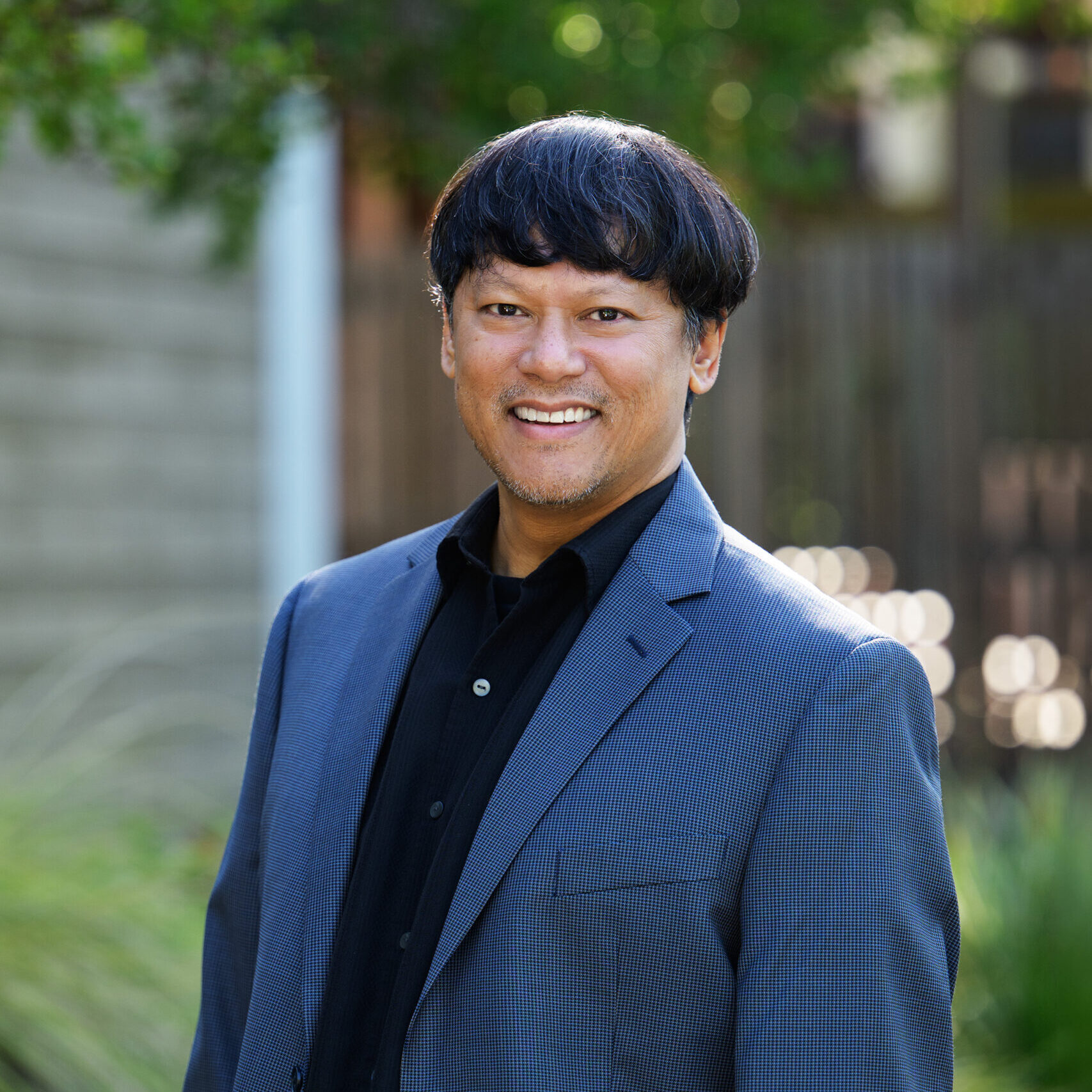
Please join us in welcoming Jeff to Dreyfuss + Blackford. Here he is, in his own words.
How would you describe your professional experience?
I’d describe my professional experience as grounded in a pragmatic, problem-solving approach. I balance big-picture thinking with close attention to detail, making sure ideas not only work conceptually but also hold up in practice. Over time, my experience has grown steadily in both responsibility and complexity, with a consistent focus on delivering thoughtful, well-executed solutions rather than just checking boxes.
How would your teammates describe your working style?
People often say I’m a reliable, solutions-oriented team member—someone who stays focused, communicates clearly, and helps move projects forward. I try to take the ‘me’ out of team in order to elevate the collaborative efforts of everyone, and I genuinely value creating an environment where ideas can be shared openly and strengthened collectively.
I prioritize clarity and collaboration, and I aim to contribute to outcomes that are practical, well-resolved, and meaningful in the real world.
+“I take the ‘me’ out of team.”
Who or what has had the biggest influence on your approach to architecture?
Two of my biggest architectural influences are Bernard Tschumi and Daniel Libeskind. I was just talking with Jozef in the office recently, and we geeked out about architectural influences—those two immediately came to mind.
I connect with Tschumi’s work in the way he understands the relationship between form and space, especially the literal and figurative intersections between the two. There’s a conceptual rigor to his work that I really admire, and I relate to the fact that he operates as both a practitioner and an academic. Like him, I’m interested not just in producing architecture, but in teaching and engaging with the discipline on a deeper, more critical level.
Libeskind I connect with for a different reason. His background as a musician really resonates with me, and you can feel that influence in his architecture. His work has a sense of balance and harmony between form and space, almost like a composition—with moments of tension, rhythm, and release. That musicality in architecture is something I find really compelling.
Where did you grow up, and did your surroundings shape how you see design?
I grew up just outside Washington, D.C., in McLean, Virginia—specifically the Langley area, right in the backyard of the CIA. A big part of my childhood was tied to the city itself. My parents owned Thai restaurants in downtown D.C., so my brother and I spent a lot of time there. While they worked, we often had the freedom to explore the city on our own—something that felt normal at the time, especially in a pre-9/11 world.
Because of that, D.C. became a kind of extended backyard. Visiting the Smithsonian museums and being surrounded by the monuments and civic spaces was just part of our weekly routine. At the time I don’t think I fully understood the impact it was having on me, but looking back, I can clearly see how those experiences shaped my appreciation for architecture.
Being immersed in a city where history, symbolism, and design are so prominent left a lasting impression. Revisiting D.C. today, I can draw a direct connection between that environment and my decision to pursue architecture—it cultivated an early awareness of how powerful and meaningful the built environment can be.
What’s something people might be surprised to learn about you?
Something that often surprises people is that I was once on the path to becoming an Olympian. Between undergrad and graduate school, I took a few years off to pursue snowboarding full-time. I moved to Vermont, where I spent three winters training and competing at a high level with the goal of making it to the Olympics.
During that time, I competed in events like the U.S. Open of Snowboarding and rode in the X Games. My primary focus was halfpipe, which I see as one of the highest forms of both technical skill and freestyle expression in the sport. What ultimately ended that pursuit was an injury—I crashed while practicing in the halfpipe and broke my ribs. It’s something I still feel to this day.
Even so, it was a defining period in my life that pushed my discipline, creativity, and drive in a completely different way. I still attribute the work ethic of daily training to my professional work today.
+“I still attribute the work ethic of daily training to my work today.”
Any hobbies, creative outlets, or passions?
In addition to snowboarding, music is a big creative outlet for me. I play upright bass with the ARC Orchestra, and it’s something I really look forward to week after week. After a full day of work, spending a few hours immersed in music is a great mental release—a completely different rhythm and way of thinking.
Our rehearsals are on Wednesday nights—hump day!—which works out perfectly. It breaks up the week and gives me something energizing to look forward to right in the middle of it. It’s a balance that keeps me both grounded and creatively engaged.
If you could live in any city or country for a year, where would you choose, and why?
If I could live anywhere for a year, I’d choose the Swiss Alps. I’ve always been drawn to mountain climates and scenery—the pace, the atmosphere, and the connection to nature really resonate with me. As an avid snowboarder who spends most of my winter free time up in Tahoe, the idea of living in the Alps feels like a natural extension of that passion.
It would also be a great opportunity to step away from the hustle and bustle of city life and reset in a more grounded environment. At the same time, Switzerland offers a strong design culture and appreciation for the built environment, so I’d experience not only incredible landscapes but also thoughtful architecture and planning in a more intentional, everyday way.
If you could instantly acquire a new skill or talent, what would you choose, and why?
If I could instantly acquire a new skill, I’d choose to fly planes. I’ve always been drawn to the idea of flying—the freedom, the perspective, and the level of skill it requires. In many ways that’s probably why I enjoy flying drones; it’s the closest I’ve gotten so far. But being able to actually pilot an aircraft would take that fascination to a completely different level.
If you weren’t in architecture, what would you be doing?
Probably either a full-time musician—or, if I hadn’t hurt myself, a full-time snowboarder.
What is your proudest accomplishment in life so far?
I can honestly say—I’m still working on that one.
Welcome to Dreyfuss + Blackford, Jeff. Between the discipline of the halfpipe, the rhythm of an upright bass, and a real gift for taking the ‘me’ out of team, you bring a rare mix to the studio. We’re glad you’re here—and we can’t wait to see where it takes the work ahead.